

If you’re new to leather and feeling unsure where to start, you’re not alone. One of the most common things we hear is, “I don’t want to buy the wrong leather.”
Leather can feel overwhelming at first — especially if you’ve only seen stiff or heavily processed hides before.
The good news is this: soft leather is one of the easiest and most forgiving places to start.
At Distant Drums Leather, we specialize in soft, flexible, ready-to-use hides like deerskin, elk, moose, and bison.
These leathers don’t fight you. They move naturally, feel good in your hands, and allow you to learn without unnecessary frustration.
This guide breaks down the differences between these leathers in plain language, so you can choose confidently and get started.

Bison, deerskin, elk, and moose soft leather comparison
In This Guide
-
What “soft leather” actually means
-
How deerskin, elk, moose, and bison differ
-
What each leather is commonly used for
-
How to choose the right leather for your project
What Does “Soft Leather” Mean?
When we talk about soft leather, we’re referring to hides that:
-
Are flexible right out of the box
-
Drape naturally instead of feeling stiff
-
Feel comfortable in your hands
-
Don’t require special prep or treatment
Quick shortcut if you’re not sure where to start:
• Want the softest and easiest to work with → Deerskin / Buckskin
• Want more strength but still soft → Elk
• Want thick and cushioned → Moose
• Want rugged with bold grain → Bison
Deerskin & Buckskin Hides: Lightweight, Soft, and Very Forgiving
Deerskin and soft tanned buckskin leather is often where people start — and for many, it stays a favorite.
Why people love them:
-
Extremely soft and flexible
-
Lightweight with beautiful drape
- Easy to cut and hand sew
-
Slight stretch that forgives uneven stitching
If you want something easy to handle and not intimidating, these are a solid choice.
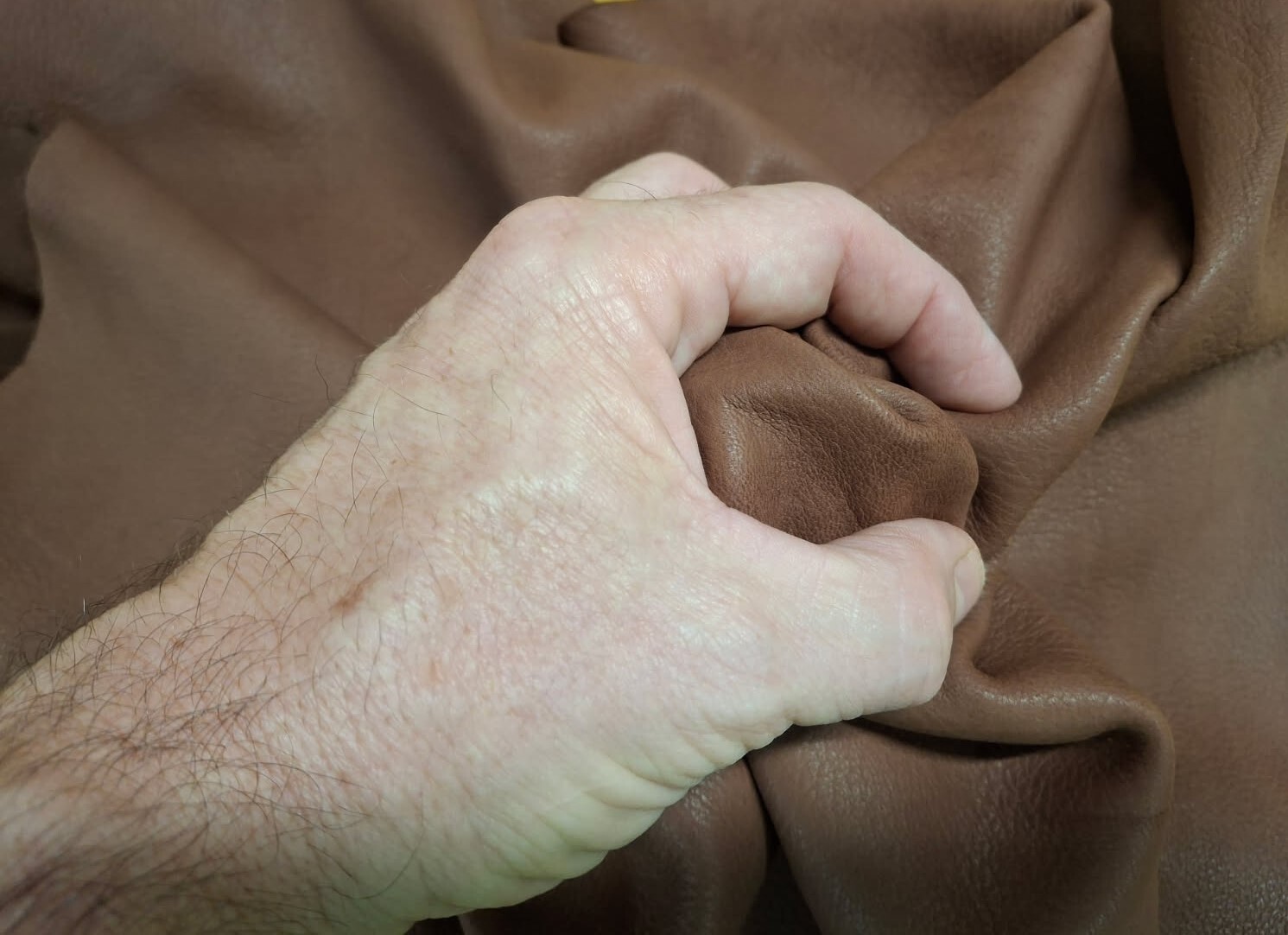
Deerskin leather is soft, pliable, and easy to work with— ideal for beginners.
Deerskin / Buckskin at a glance:
• Flexibility: Very high
• Ease of sewing: Very easy
• Best for: Garments, light accessories, lacing
Elk Leather: Stronger Without Losing Softness
Elk leather is a very popular hide because it strikes a balance between softness and durability.
It’s thicker and stronger than deerskin but still flexible and comfortable to work with. This makes it a great choice for projects that will see regular use.
Common Elk Leather Uses
-
Heavier buckskin clothing
-
Moccasins
-
Large bags, pouches
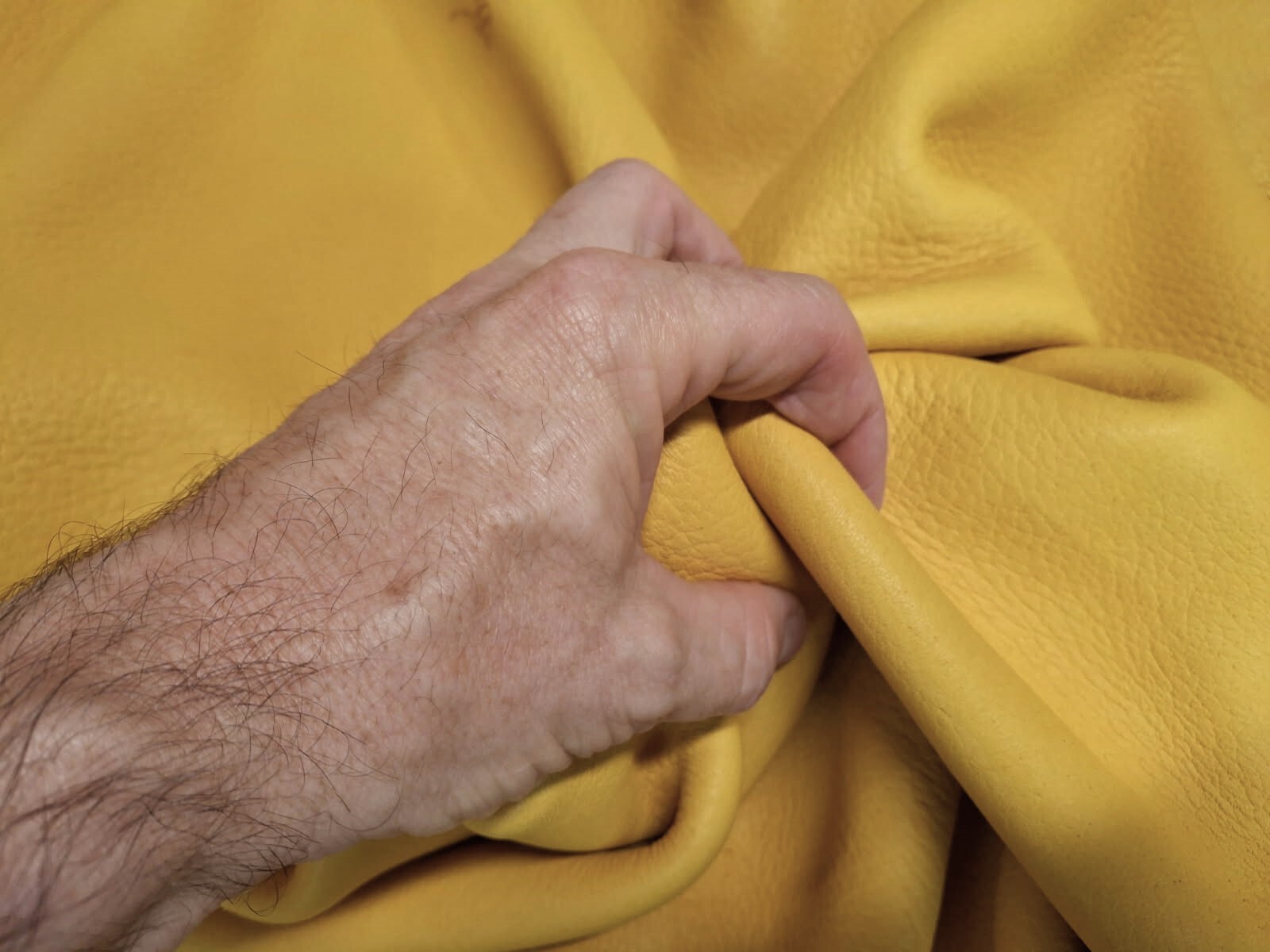
Elk leather offers durability while remaining soft and workable.
Moose Leather: Thick, Soft, and Cushioned
Moose leather often surprises first-time buyers. Even though it’s thicker, it remains naturally soft and flexible.
Moose has a plush, cushioned feel that gives finished items a substantial presence without becoming stiff and a unique grain texture.
Moose Leather Works Well For
-
Heavy shooting and possibles bags
-
Moccasins and mukluks
-
Rifle Cases, shooting pouches
-
Projects where you want weight and softness together
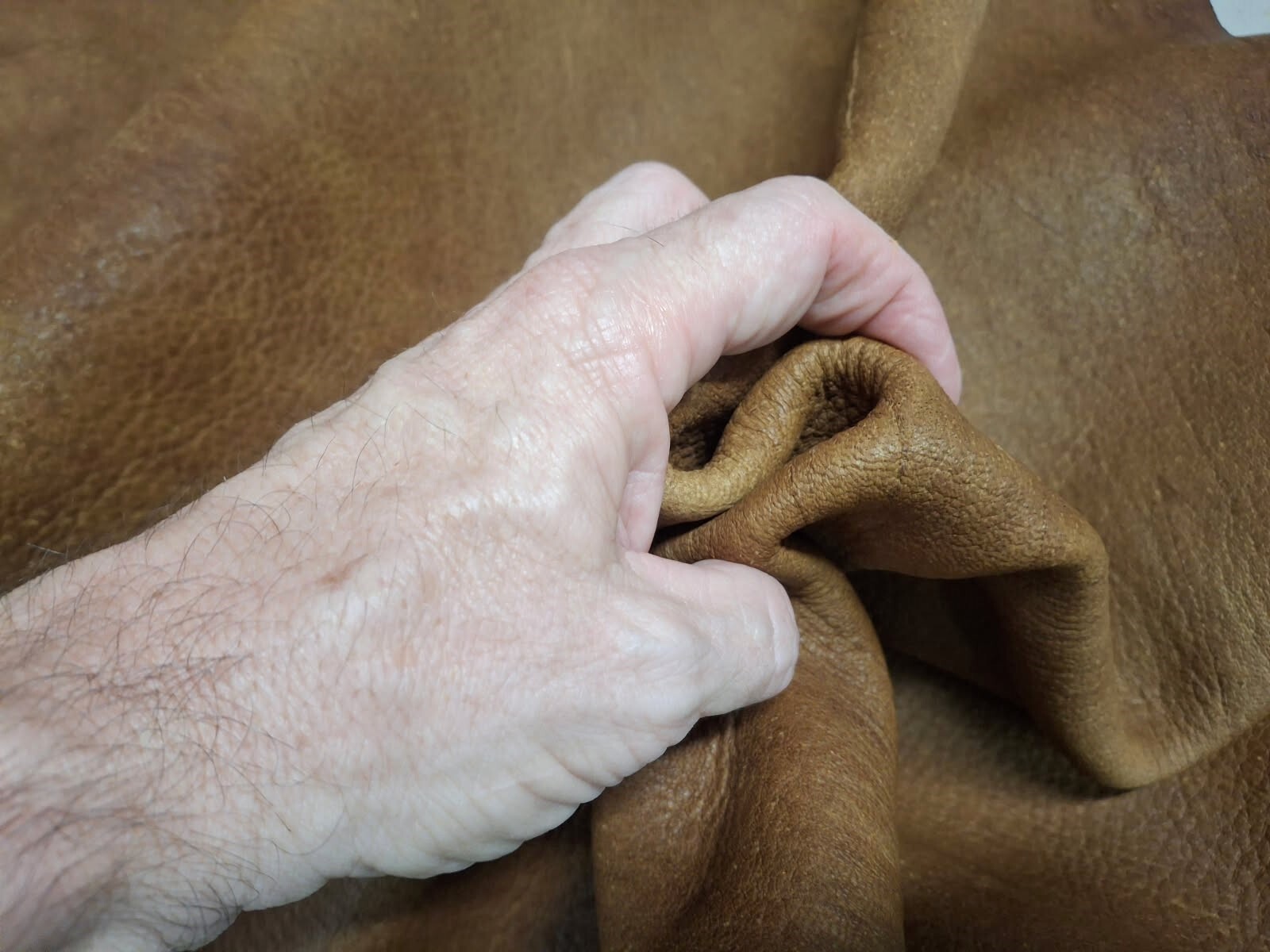
Moose leather is thicker but still soft, with a cushioned feel.
Bison Leather: Rugged, Bold, and Built to Last
Bison leather stands out for its bold grain and durability. It has a dense fiber structure that makes it strong while remaining flexible compared to stiff leathers.
Even when it’s sold as “soft,” bison will still feel firmer than deerskin or elk, which makes it better for structured bags than garments.
Bison develops character quickly with use and is ideal for long-term projects.
Common Bison Leather Uses
-
Rugged bags
-
Rifle and bow cases, quivers
-
Moccasins, boots
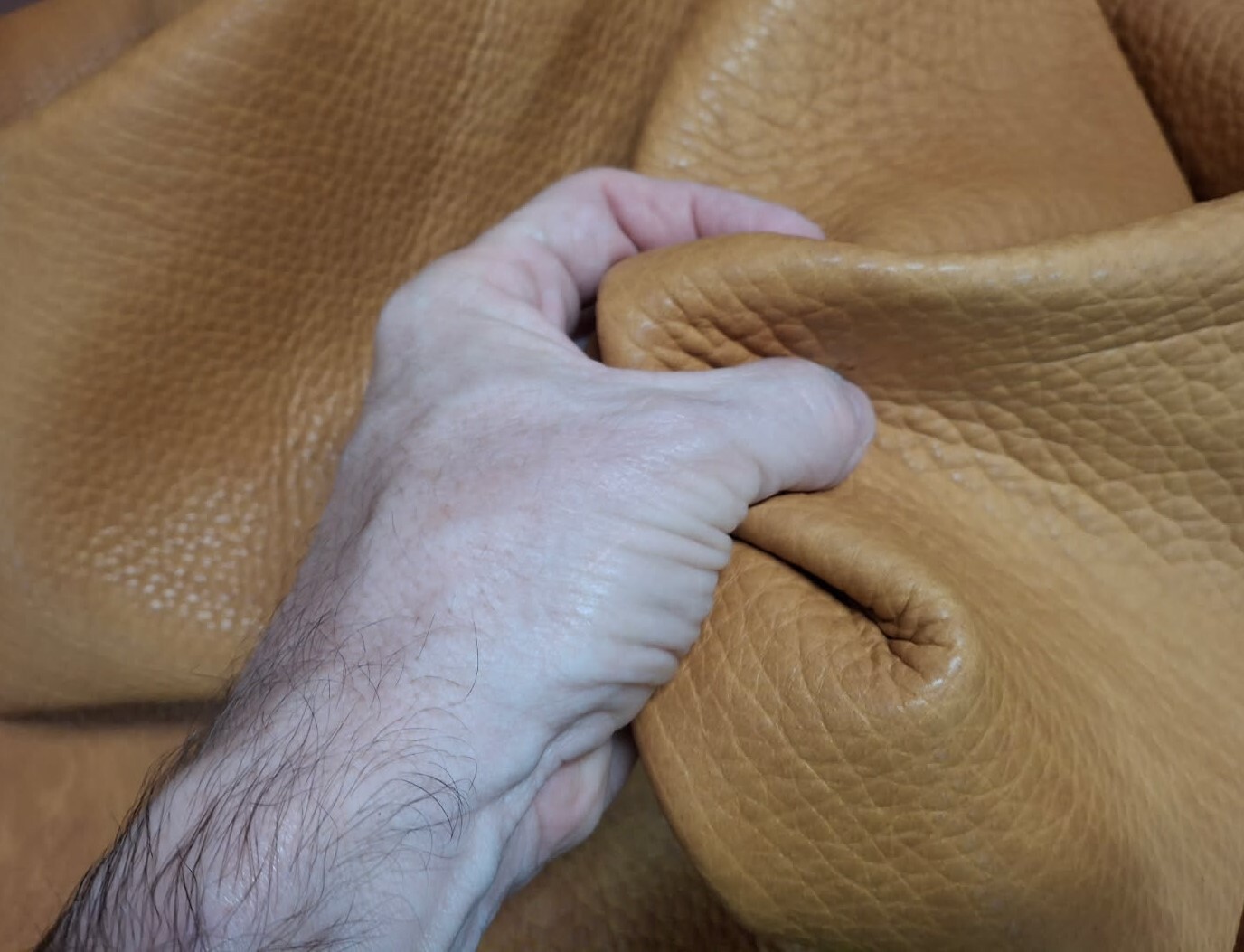
Bison leather has a bold pebble grain and excellent durability.
| Leather | Flexibility | Best Use |
|---|---|---|
| Deerskin | Very High | Clothing, soft bags |
| Elk | High | Moccasins, heavy buckskin clothing |
| Moose | Medium | Moccasins, boots, Large bags |
| Bison | Medium-High | Rugged bags, moccasins, rifle cases |
Frequently Asked Questions
Is soft leather really easier for beginners?
Yes — especially if you’re new to leatherwork. Soft leathers like deerskin and elk don’t fight you the way stiff veg-tan can. They’re easier to cut, easier to stitch, and more forgiving if your spacing or tension isn’t perfect. That’s why many first-time makers feel more confident starting with soft hides.
Do I need special tools to work with soft leather?
No special tools are required. Basic leather tools — needles, thread, a sharp blade or scissors, and a hole punch or awl — are enough to get started. In fact, many people find soft leather easier on their hands because it doesn’t require as much force to pierce or stitch.
Should soft leather projects be lined?
-
Don’t line it if it’s a small pouch, fringe-heavy piece, or you want it to drape.
-
Line it if it’s a bag that will carry weight, you want more structure, a finished interior, or you want to reduce stretch over time.
-
Half-line it (quick compromise) if you just need strength at stress points: base, strap tabs, mouth/top edge.
How to Choose the Right Soft Leather
Instead of asking “What’s the best leather?”, ask yourself this:
-
What type of use/wear will my project get?
-
How do I want it to feel, drape, move?
-
What should it look like?
There’s no single right answer and many variables. This is where you put our experience to work for you.
Reach out and give us as much info as possible on what you are planning and we will give you some great options.