

One of the most common questions we hear from people new to working with soft leather is whether a hide will be too thick or too thin for their project.
That’s a fair concern — but with soft leather, thickness doesn’t always behave the way people expect.Thicker doesn’t automatically mean stiff, and thinner doesn’t always mean fragile.
This guide breaks down how soft leather thickness and weight feel in real use, how deerskin, buckskin, elk, moose, and bison compare, and how to choose the right hide without overthinking it.
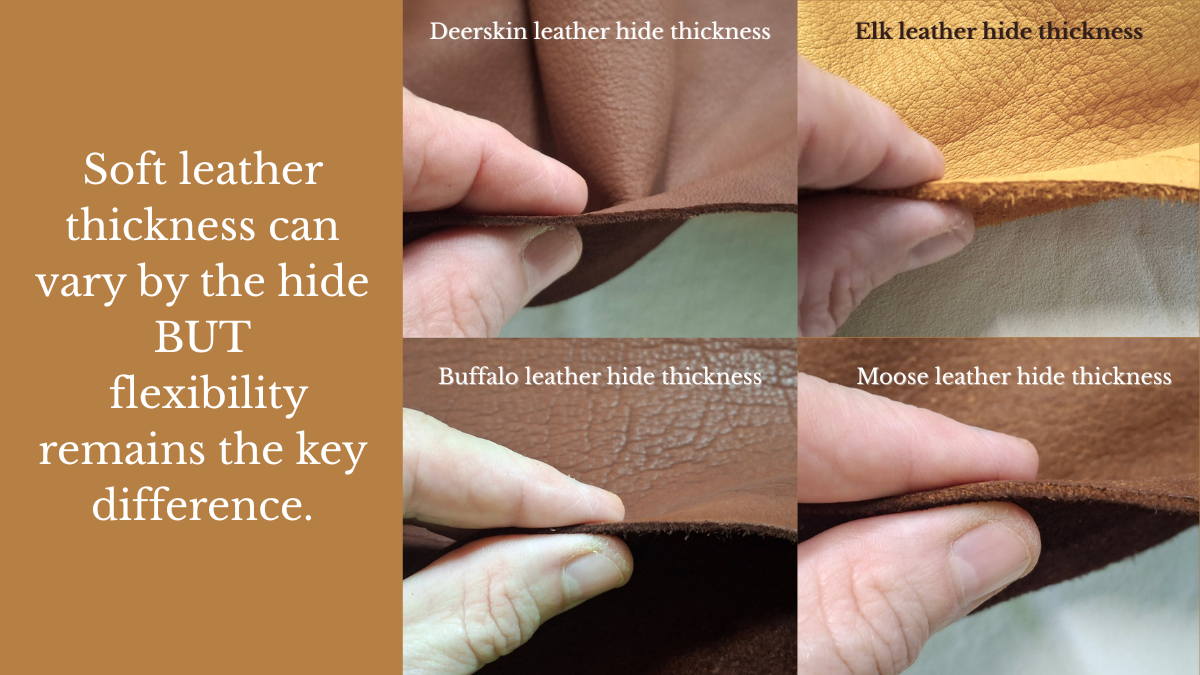
Soft leather thickness varies by hide, but flexibility plays a bigger role than measurements alone.
What You’ll Learn in This Guide
-
Why thickness matters differently with soft leather
-
How weight and flexibility work together in real projects
-
What deerskin, elk, moose, and bison actually feel like in use
-
How to choose the right leather without overthinking measurements
SHOP ALL LEATHER HIDES
Before comparing specific hides, it helps to understand why thickness behaves differently when you’re working with soft leather.
Why Thickness Feels Different With Soft Leather
When people think about leather thickness, they often picture stiff, rigid hides that are difficult to bend or sew. Soft leather behaves differently. It compresses, folds, and moves naturally, which means thickness alone doesn’t determine how easy a hide is to work with.
Soft leather:
-
Compresses instead of cracking
-
Folds without holding sharp creases
-
Moves naturally in finished items
-
Feels thinner in use than it measures
This means a thicker soft leather can still feel comfortable and workable, while a thinner soft leather can still be durable enough for everyday use.
For beginners especially, this flexibility makes soft leather much more forgiving.
Once you understand why soft leather behaves differently, the next step is separating thickness from overall weight.
Understanding Weight vs. Thickness
Thickness is only one part of how a piece of soft leather feels and performs. Weight, density, and fiber structure all play a role. Two hides that measure similarly can behave very differently once you start cutting, folding, or sewing them.
For example, a thinner piece of bison leather may feel heavier and more supportive than a thicker piece of deerskin. That difference comes from fiber density, not just thickness — and it’s why focusing only on measurements can be misleading with soft leather.
That’s why we encourage people to think in terms of use and feel, not just numbers.
With those basics in mind, let’s look at how thickness and weight feel in real projects, starting with deer and buckskin leather.
Deerskin & Buckskin Hides: Light, Flexible, and Easy to Handle
Deerskin and buckskin leather are some of lightest and most flexible soft leathers we carry, which makes them especially approachable for beginners. They drape easily, feels soft in the hand, and doesn’t resist movement the way stiffer leathers do.
How They Feel
-
Very flexible
-
Lightweight in the hand
-
Drapes easily
-
Slight natural stretch
Deerskin and buckskin hides are easy to cut, sew, and lace making them great for most beginner projects.
Best Uses for Deerskin/Buckskin by Weight
-
Small pouches
-
Garments and lining
-
Fringe and Laces
-
Handlw wraps, beadwork backing
They rarely chosen for projects that need a lot of structure, but it excel when comfort and softness matter most.
Compared to elk, deerskin feels lighter and more drapey, making it better suited for garments and smaller accessories than for structured bags.
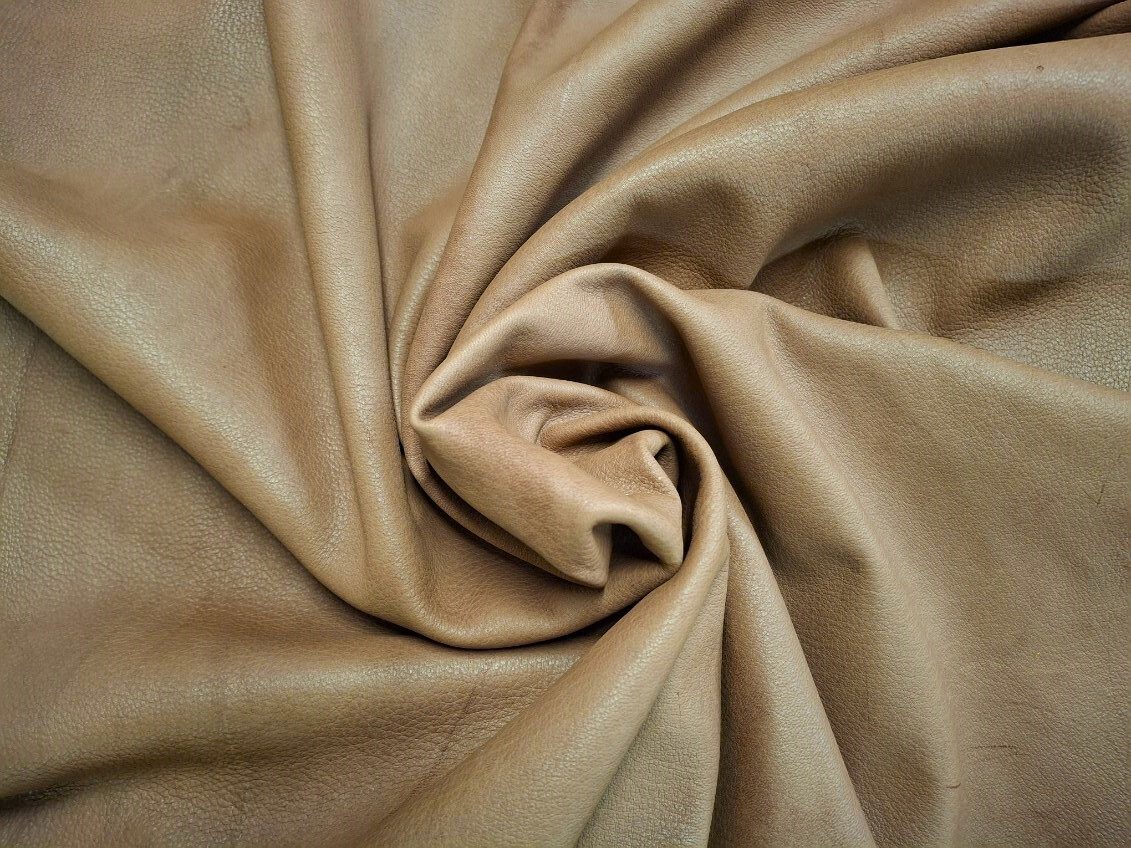
Deerskin & Buckskin leather are lightweight and very flexible, making them easy to work with.
Elk Leather: Medium Weight With More Support
Elk leather is a popular choice for projects that need more support than deerskin can provide while still remaining soft and flexible. It feels noticeably stronger in the hand, holds its shape better, and is well suited for items that will see regular use.
How Elk Leather Feels
-
Medium weight with noticeable support
-
Flexible but supportive/structured than deer or buckskin hides
-
Less stretchy than deer
-
Holds shape better in finished items
Elk is often chosen when a project needs to carry weight or maintain its form while still feeling soft.
Best Uses for Elk by Weight
-
Larger Bags
-
Moccasins
-
Bucksin jackets, heavy clothes
-
Rifle cases, quivers
Elk leather is a great step up if deerskin feels too light for your project.

Elk leather offers more structure than deerskin while remaining soft.
Compared to deerskin, elk offers more structure and durability, while still remaining softer and more flexible than thicker hides like moose or bison.
Moose Leather: Thicker, Cushioned, and Substantial
Moose leather is noticeably thicker than deerskin or elk, but it remains surprisingly soft and flexible. Instead of feeling stiff, it has a cushioned, padded quality that gives finished items a substantial, comfortable feel.
How Moose Leather Feels
-
Medium-heavy weight
-
Soft and cushioned
-
Substantial in hand
-
Flexible despite thickness
Moose leather feels padded rather than stiff, which gives finished items a solid, comfortable presence.
Best Uses for Moose by Weight
-
Larger pouches and handbags
-
Moccasins, mukluks, and footwear
-
Shooting bags, possibles bags
-
Projects where thickness is desired
Compared to elk, moose feels thicker and more cushioned, while remaining softer and more flexible than the denser feel of bison leather.
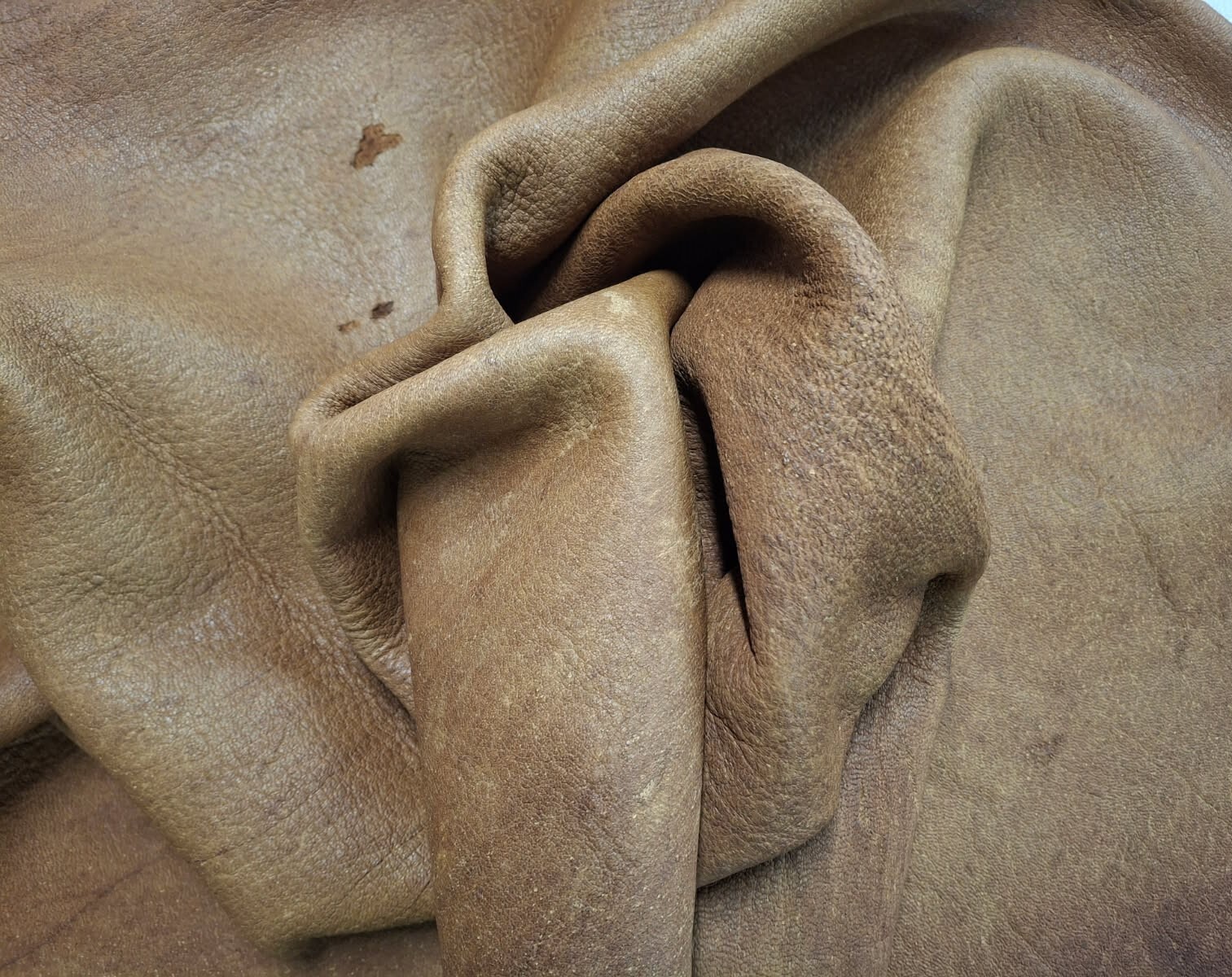
Moose leather is thick but remains flexible and comfortable.
Bison Leather: Dense, Heavy, and Durable
Bison leather is known for its dense fiber structure and bold grain, which give it a heavier, more rugged feel than other soft leathers. While it remains flexible, bison is often chosen for projects that need long-term durability and visible character.
How Bison Leather Feels
-
Medium-heavy weight
-
Dense and durable
-
Bold grain texture
-
Still flexible compared to stiff leathers
Bison is often chosen for projects that need to last and show character over time.
Best Uses for Bison by Weight
-
Rugged bags that get heavy use
-
Rifle cases, quivers
-
Moccasins
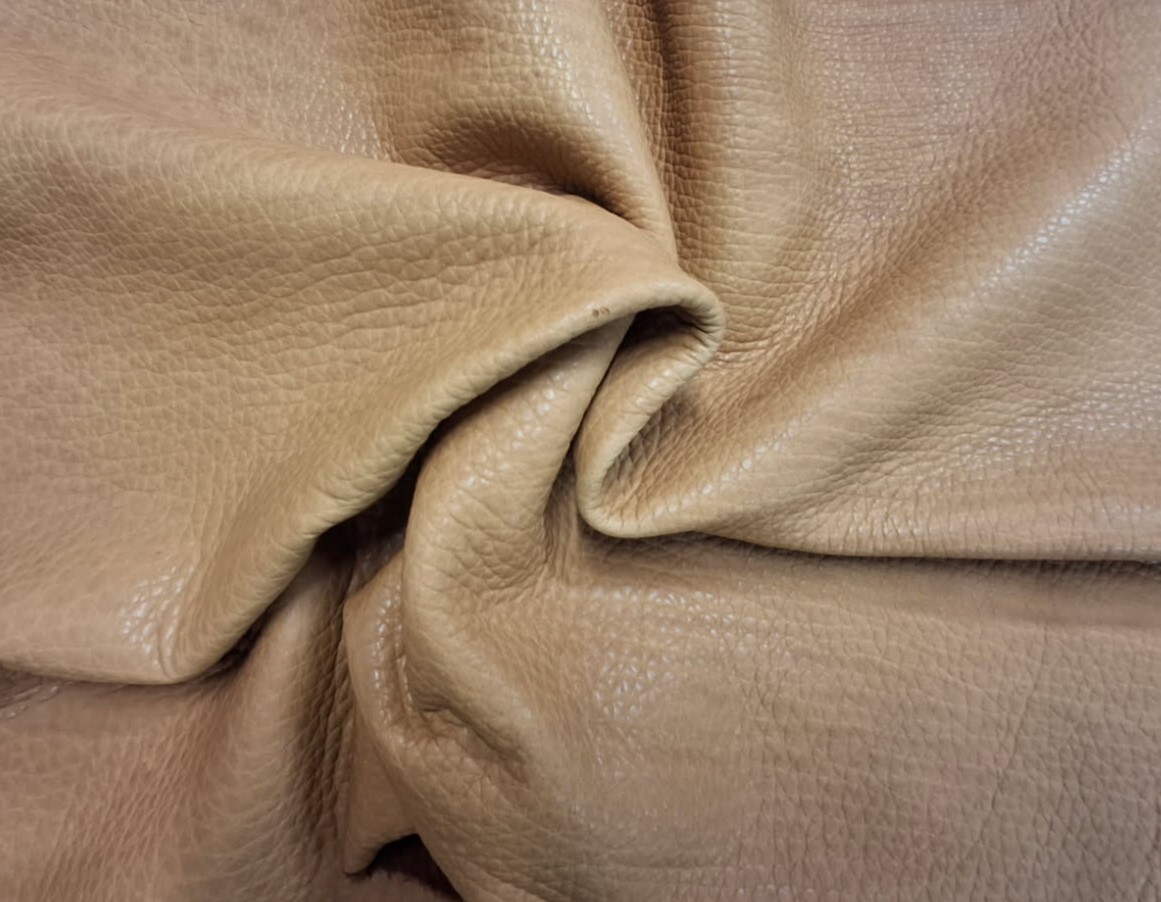
Bison leather is dense and durable with a bold grain.
Compared to elk and moose, bison feels denser and more rugged, making it better suited for hard-use projects where durability and character matter most.
If you prefer to compare these leathers at a glance, the table below summarizes how thickness and weight feel across each hide.
| Leather | Weight (In hand) | Flexibility | Common Uses |
|---|---|---|---|
| Deerskin | Light | Very High | Garments, small bags, bucskin clothing |
| Elk | Medium | High | Bags, moccasins |
| Moose | Medium-Heavy | Medium | Moccasins, cases |
| Bison | Heavy | Medium-High | Moccasins, large bags, scabbards |
Frequently Asked Questions About Soft Leather Thickness & Weight
Are deerskin & buckskin hides always thinner than elk, buffalo, etc?
Many people assume this but that is not always the case.
Leather is tanned "full weight" meaning the untouched thickness that it came off the animal. Once tanned they are split (cut to the desired weight/thickness) depending on final use.
So a hide like deerskin could be left thicker for use in shoes, etc., than a buffalo hide that is being split down thinner for use like gloves or garments.
Its important to take into consideration the type of leather as well as the weight/thickness that is best for your project. Not sure....just ask and we will glaldy give you the best options!
Is thicker soft leather harder to work with than thinner leather?
Not necessarily — and this is where soft leather behaves very differently than people expect.
With soft leathers like elk, moose, and bison, thickness doesn’t automatically mean stiffness. These hides compress, bend, and move naturally, which often makes them easier to work with than thinner but stiff leathers. Many beginners are surprised to find that a thicker soft leather can be more forgiving to sew and handle because it doesn’t fight against the needle or crack when folded.
The key difference is flexibility. A thick, flexible hide will usually be easier to work with than a thin, rigid one.
Is deerskin/buckskin too thin for bags or everyday use?
These aren't “too thin,” but it is best suited for lighter-duty bags and projects.
Because these skins are very soft and lightweight, they work well for:
-
Small pouches
-
Lightweight bags
-
Garments and accessories
If you’re planning a larger bag, tote, or something that needs to carry weight, deerskin and buckskin hides may feel too floppy on their own.
In those cases, elk, moose, or bison are usually better choices because they provide more support while staying soft.
How do I choose between elk, moose, and bison if they all feel thick?
The best way to choose is to think about how you want the finished item to feel.
-
Elk leather offers a balance of softness and structure. It’s a great choice if you want flexibility but still need support for everyday use.
-
Moose leather feels thicker and more cushioned. It’s ideal for projects where you want a substantial, padded feel without stiffness.
-
Bison leather is denser and more rugged. It’s best for items that will see hard use and where durability and texture matter.
They may feel similar at first glance, but they behave differently once you start using them.
Should I choose leather thickness first or leather type first?
Usually its best to choose leather type first.
Thickness behaves differently depending on the hide. A “thick” deerskin will feel very different from a “thick” bison hide. By choosing the leather type that matches your project’s needs, you’ll automatically end up with a thickness that makes sense.
Once you’ve chosen the hide, fine-tuning thickness becomes much easier — and often less important than beginners expect.
Why does soft leather feel thinner once I start working with it?
Soft leather compresses as you work with it.
When you fold, sew, or handle a soft hide, the fibers relax and conform instead of resisting movement. This makes the leather feel thinner and more manageable during construction, even if it looked thick at first.
This is one of the reasons soft leather is so beginner-friendly — it adapts as you work.
What’s the biggest mistake beginners make when choosing leather thickness?
The most common mistake is overthinking thickness and underthinking use.
Many beginners assume thicker is always better or stronger, but that’s not always true with soft leather. Choosing a hide based on how the finished item will be used — worn, carried, or handled — leads to better results than focusing on numbers or measurements.
Soft leather is forgiving. Let the project guide the choice, not fear of making a mistake.