How Leather Hides Are Measured
(And What Those Numbers Actually Mean)
If you’ve ever bought leather for a shirt, bag, or other projects and noticed prices listed by the square foot you’ve run into leather measurement.
It’s not complicated, but it is different from buying fabric off a neat little roll. L
Leather Is Measured by Area
Leather hides are measured by surface area, not by length or width—which matters a lot when you’re planning patterns, layouts, and yield for leathercraft projects.
That’s because hides are natural shapes—no straight edges, no perfect rectangles.
The most common units you’ll see are:
Square feet (sq ft) – common in the US
Square meters (sqm) – common internationally
If a hide is marked “22 sq ft,” that means the entire usable surface area of that hide adds up to 22 square feet.
What Those Numbers on the Hide Mean
Those handwritten or stamped numbers usually represent the total measured area of the hide.
Measuring to the Nearest Quarter Square Foot
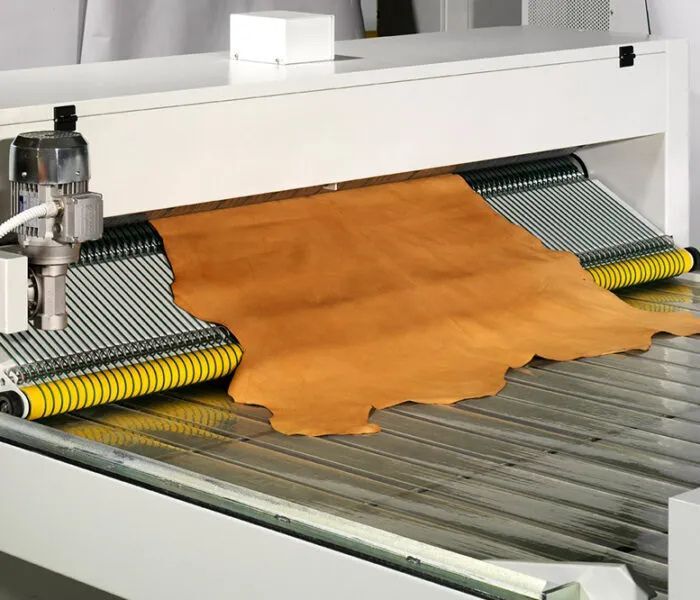
Most commercial leather measuring machines calculate hide size to the nearest quarter of a square foot (0.25 sq ft).
The machine scans the entire hide surface digitally
The total area is calculated in square feet
The final number is rounded to the nearest 0.25 sq ft
For example:
A hide measuring 22.08 sq ft may be recorded as 22.00 sq ft
A hide measuring 22.13 sq ft may be recorded as 22.25 sq ft
A hide measuring 22.38 sq ft may be recorded as 22.50 sq ft
The last number on the size represents the quarter of a foot.
1=1/4, 2= 1/2, 3= 3/4
So if the hide is 5.25 square feet (SF) it might read 51
Holes and Cut-Outs Are Not Counted
Measuring machines do not scan holes, major cut-outs, or missing sections in a hide.
Areas where leather is completely missing are excluded from the measurement
You are not charged for open holes or gaps in the hide
Only the actual leather surface passing under the scanner is counted
Small natural marks or thin spots are still part of the measured area, but true holes are ignored by the machine.
This rounding and scanning standard keeps pricing consistent across suppliers and is widely accepted in the leather industry.